

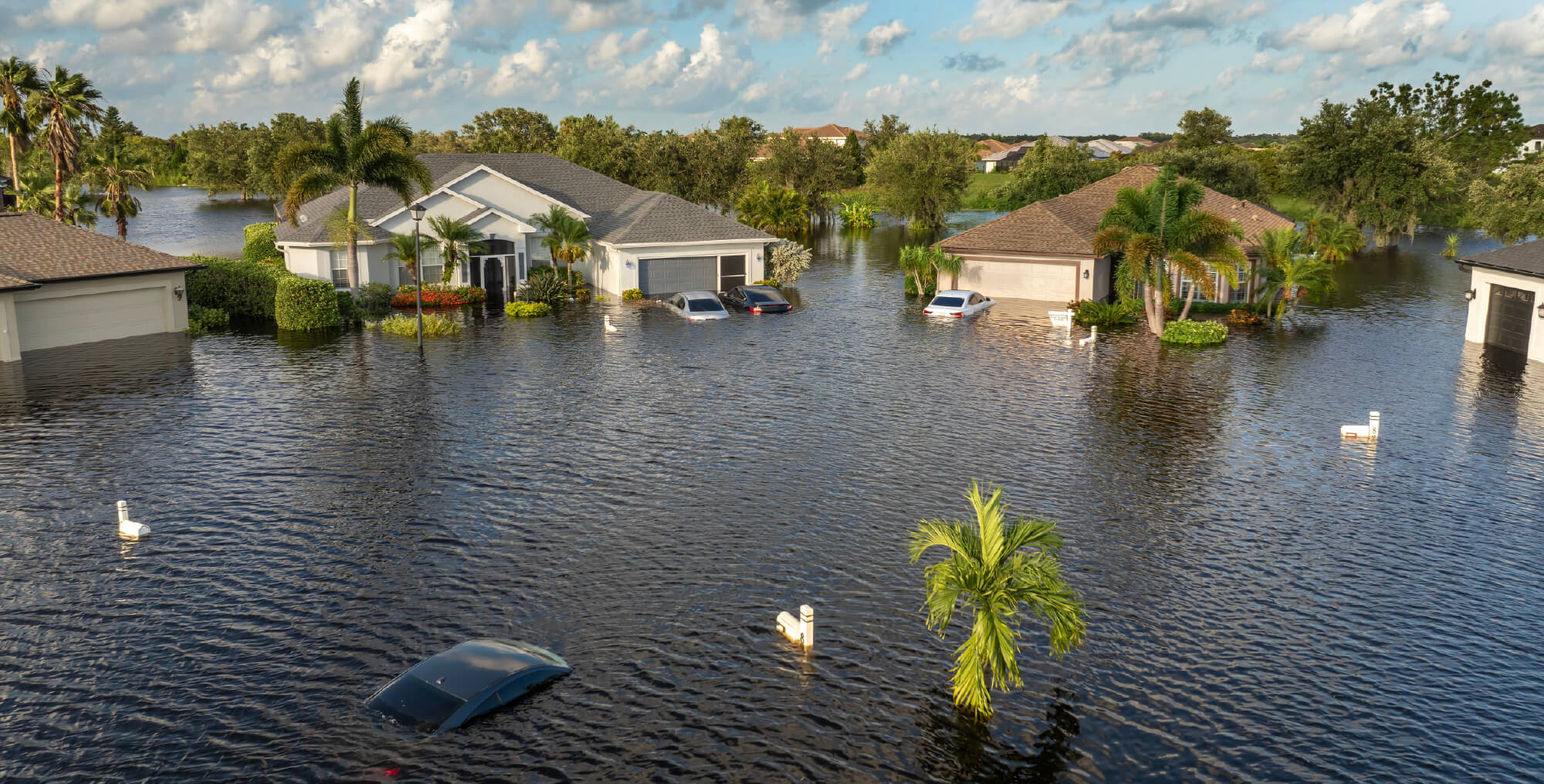
If you’ve lived in Florida for any length of time, you know the drill. As the calendar flips to June, we all start paying a little more attention to the weather forecasts, keeping one eye on the tropics and wondering what this year’s hurricane season might bring. And while we can’t control the weather, we can absolutely control how prepared we are for it.
Here at Comegys Insurance Agency, we’ve been helping Florida families protect their homes and their futures for years. And every single year, as hurricane season approaches, one topic comes up more than any other: flood insurance. So let’s sit down and have an honest conversation about what flood insurance really means for Florida homeowners, what it covers, what it costs, and why the time to think about it is right now—not when there’s a storm spinning in the Gulf.
The Big Misconception: “My Homeowners Insurance Has Me Covered”
Let’s start with something that surprises a lot of people: your standard homeowners insurance policy does not cover flood damage. That’s worth repeating because it’s one of the most common misconceptions we encounter. Your homeowners policy will typically cover wind damage from a hurricane—a tree falling on your roof, shingles being torn off, that sort of thing. But the moment water starts rising from the ground up, entering your home from outside? That’s flooding, and that’s a completely separate policy.
According to FEMA, flooding is the most common and costly natural disaster in the United States. Nearly 90% of all presidentially declared disasters involve flooding in some form. Flooding caused over $8.8 billion worth of damage to homes and businesses in 2024 alone—and a staggering $3.8 billion of that damage occurred in areas that weren’t even considered high-risk flood zones.
And yet, only about 4% of homeowners nationwide have flood insurance. In Florida, where we’re surrounded by water and see more than our fair share of severe weather, that number is higher—but still, just 13% of Florida homes carry flood coverage. That’s a lot of families who could find themselves facing devastating financial losses if the worst happens.
What We Know About Hurricane Season 2026
The 2026 Atlantic hurricane season officially runs from June 1 through November 30. Early forecasts from organizations like Tropical Storm Risk suggest we’re looking at a season with activity close to the 30-year average—approximately 14 named storms, 7 hurricanes, and 3 major hurricanes (Category 3 or higher). These numbers are based on factors like sea surface temperatures in the Atlantic and the potential development of El Niño conditions later in the summer.
Now, here’s the thing about seasonal forecasts: they give us a general sense of what to expect, but they can’t tell us whether a specific storm will form, where it will go, or whether it will impact Florida. What we do know from experience is that it only takes one storm to change everything. Remember, it doesn’t have to be a major hurricane to cause significant flooding. Even tropical storms and heavy rain events can overwhelm drainage systems and send water into homes that have never flooded before.
The National Hurricane Center will begin issuing regular Tropical Weather Outlooks on May 15, 2026, giving us all a heads-up on developing systems. But by that point, you’ll want your flood insurance already in place—and here’s why.
The 30-Day Waiting Period: Why Timing Matters
One of the most important things to understand about flood insurance is that there’s typically a 30-day waiting period before your coverage takes effect. This isn’t insurance companies being difficult—it’s a federal requirement designed to prevent people from rushing to buy coverage only when a storm is already on the way.
Think about it this way: if you see a hurricane forming in the Caribbean and decide to purchase flood insurance that day, you won’t be covered for that storm. Your policy won’t kick in for another 30 days. By then, the damage could already be done, and you’d be stuck with the bill.
There are a few exceptions to the waiting period. If you’re purchasing flood insurance as part of buying a new home, refinancing your mortgage, or if your area was recently remapped into a flood zone, the waiting period may be waived or reduced. Some private flood insurance providers also offer shorter waiting periods—sometimes as little as 10 days. But the safest bet? Get your coverage in place now, in May, well before the heart of hurricane season arrives.
Understanding Your Flood Insurance Options
When it comes to flood insurance in Florida, you generally have two main options: the National Flood Insurance Program (NFIP) and private flood insurance. Let’s break down both.
The National Flood Insurance Program (NFIP)
The NFIP is a federal program administered by FEMA that provides flood insurance to property owners in participating communities. It’s been around since 1968, and Florida is by far its largest customer—accounting for approximately 35-40% of all NFIP policies nationwide. That’s about 1.7 million policies providing over $440 billion in coverage across the state.
Through the NFIP, residential property owners can get up to $250,000 in building coverage and up to $100,000 in contents coverage. The program is delivered through a network of more than 47 private insurance companies (called “Write Your Own” insurers), so you can typically purchase an NFIP policy through the same agent who handles your homeowners insurance. You can learn more and get a quote through FloodSmart.gov, the official NFIP resource.
Private Flood Insurance
Over the past several years, the private flood insurance market has grown significantly, giving homeowners more options than ever. Private insurers can often offer higher coverage limits—important if your home’s value exceeds the NFIP’s $250,000 building limit—as well as additional coverages that the NFIP doesn’t provide, such as loss of use coverage that pays for temporary housing if you’re displaced by flooding.
Private flood insurance can sometimes be more competitively priced than NFIP policies, depending on your specific property and risk factors. However, it’s important to compare policies carefully. Some private policies may have more restrictions or different coverage terms. That’s where working with an experienced insurance agent can really make a difference—we can help you understand exactly what you’re getting and make sure it meets your needs.
How Much Does Flood Insurance Cost in Florida?
This is the question everyone wants answered, and the honest answer is: it depends. Flood insurance premiums in Florida vary widely based on your property’s specific characteristics and location. That said, let’s talk about some general ranges to give you an idea.
According to recent FEMA data, the average annual cost of NFIP flood insurance in Florida is roughly $700 to $900. However, this average can be misleading because premiums range so dramatically. Homes in moderate-to-low risk flood zones might pay as little as $400 to $1,200 per year. Homes in high-risk zones (designated as A, AE, or VE zones) can see premiums anywhere from $2,000 to $15,000 or more annually, particularly in coastal areas with high velocity wave action.
Florida homeowners typically pay 2-3 times the national average for flood insurance, which makes sense given our extensive coastline and hurricane exposure. The state accounts for the largest share of NFIP claims nationwide—in 2024 alone, FEMA paid over 65,000 flood claims to Florida homeowners.
Understanding Risk Rating 2.0: A New Way of Pricing Flood Insurance
If you’ve heard anything about flood insurance in the news over the past few years, you’ve probably heard about “Risk Rating 2.0.” This is FEMA’s updated methodology for calculating flood insurance premiums under the NFIP, representing the biggest change to flood insurance pricing since the program began in 1968.
Under the old system, your premium was largely determined by your flood zone designation and whether your home was above or below the Base Flood Elevation shown on FEMA’s flood maps. Risk Rating 2.0 takes a much more individualized approach. Now, premiums are calculated based on a variety of factors specific to your property: distance from water sources, types of flooding exposure, property elevation, foundation type, and replacement cost to rebuild.
What does this mean for Florida homeowners? According to FEMA’s data, about 20% of Florida policyholders actually saw their premiums decrease under Risk Rating 2.0. Another 68% saw increases of $10 or less per month. About 12% experienced more significant increases—particularly those in high-risk coastal areas where the true risk had been underpriced for years.
The good news is that Congress has capped annual premium increases at 18% for primary residences, so even if your full-risk rate is significantly higher than what you’re paying now, you’ll reach it gradually. Once you reach your full-risk rate, you won’t see annual increases unless your actual risk changes.
How Flooding Actually Happens in Florida: Common Scenarios
When people think about flooding in Florida, they often picture hurricane storm surge washing through coastal communities. While storm surge is certainly a major concern, it’s far from the only way flooding can damage your home.
Storm Surge: This is the wall of water pushed ashore by hurricane winds. Storm surge can reach heights of 15 feet or more in major hurricanes. Coastal communities from the Keys to the Panhandle are particularly vulnerable.
Rainfall Flooding: Florida’s summer thunderstorms can dump incredible amounts of rain in short periods. When drainage systems can’t keep up, streets turn into rivers and water flows into homes—even homes that have never flooded before.
River and Creek Overflow: Florida has numerous rivers, creeks, and canals that can overflow their banks during heavy rain events. Properties near these waterways face elevated risk, but flooding can extend much further than you might expect.
Tidal Flooding: Even without a storm, high tides combined with onshore winds can cause flooding in coastal areas. This “sunny day flooding” is becoming more common as sea levels gradually rise.
Drainage System Backup: When stormwater systems become overwhelmed or blocked, water has nowhere to go but into streets and properties.
The common thread? None of these scenarios would be covered by your standard homeowners insurance policy.
Do You Actually Need Flood Insurance?
Here’s where we need to have a really honest conversation. If your home is in a high-risk flood zone (also called a Special Flood Hazard Area, or SFHA) and you have a federally backed mortgage, flood insurance isn’t optional—your lender will require it. No question there.
But what if you’re not in a high-risk zone? What if you’ve paid off your mortgage? What if you’ve lived in your home for 20 years and it’s never flooded?
We’d still encourage you to think seriously about flood coverage. Here’s why: according to FEMA, nearly one-third of all NFIP flood insurance claims come from outside high-risk flood zones. That’s right—floods don’t read maps. They can happen anywhere it rains, anywhere drainage systems can get overwhelmed, anywhere a storm can push water inland.
In Florida, we’re also dealing with changing conditions. Sea levels are rising. Rainfall patterns are becoming more intense. Development is putting more stress on drainage infrastructure. Areas that have never flooded before are now experiencing flooding—and homeowners without flood insurance are being hit with repair bills that can run into tens of thousands of dollars or more.
Just one inch of floodwater in a home can cause approximately $25,000 in damage. When you put that in perspective, the cost of flood insurance—even a few hundred dollars a year—starts to look like a pretty reasonable investment in peace of mind.
What Does Flood Insurance Actually Cover?
Understanding what’s covered—and what’s not—is crucial when it comes to flood insurance. An NFIP policy provides two types of coverage: building coverage and contents coverage.
Building coverage protects the structure of your home and its essential systems: foundation and walls, electrical and plumbing systems, HVAC equipment, water heaters and furnaces, built-in appliances, permanently installed carpeting and cabinets, window blinds, and detached garages. Building coverage is available up to $250,000 under the NFIP.
Contents coverage protects your personal belongings inside the home: furniture and electronics, clothing, portable appliances, curtains, and certain valuables like artwork (up to $2,500). Contents coverage is available up to $100,000 under the NFIP. Renters can purchase contents coverage only.
It’s worth noting that NFIP policies have some limitations. They don’t cover living expenses if you’re displaced, landscaping and outdoor property, most basement contents (though some essential items are covered), and financial losses from business interruption. If these are concerns for you, a private flood insurance policy might offer broader coverage options. That’s something we can help you explore to find the right fit for your situation.
The NFIP and Congressional Reauthorization: What You Should Know
You might have seen news coverage about the National Flood Insurance Program and Congress. Here’s what’s going on: the NFIP doesn’t have permanent authorization—Congress has to periodically renew the program’s authority to operate. The program’s current authorization is set to expire on September 30, 2026.
Now, this doesn’t mean the program is going away. Since 2017, the NFIP has been reauthorized more than 30 times through short-term extensions. FEMA and Congress have never failed to honor flood insurance contracts with policyholders. If a lapse does occur before reauthorization, existing policies remain in effect until their expiration date, and claims continue to be paid as long as FEMA has funds available.
That said, during a lapse, the NFIP cannot issue new policies or renewals. This has caused disruptions in the past, particularly for real estate transactions—the National Association of Realtors estimates that approximately 40,000 home closings per month could be impacted if flood insurance becomes temporarily unavailable.
The takeaway? Don’t let congressional politics stop you from getting the coverage you need. If you’re considering flood insurance, get your policy in place while the program is fully operational. You can stay informed about NFIP updates through FEMA’s reauthorization page.
Florida’s Citizens Flood Insurance Requirement
If you’re insured through Citizens Property Insurance Corp.—Florida’s state-backed insurer of last resort—there’s something important you need to know. The Florida Legislature has implemented a mandatory flood insurance requirement for Citizens policyholders, regardless of whether your property is in a designated high-risk flood zone.
This requirement has been rolling out in phases. If your home is insured through Citizens and located in a federally designated flood zone, you were required to have flood coverage starting in July 2023. The requirement is expanding to more policyholders over time. The goal is to ensure that Citizens policyholders have comprehensive protection against both wind and flood damage, reducing the state’s overall exposure to catastrophic losses.
If you’re not sure whether this requirement applies to you, reach out to your agent. At Comegys Insurance, we can help you understand your obligations and find flood coverage that fits your budget.
Ways to Potentially Lower Your Flood Insurance Premium
Nobody wants to pay more than they have to for insurance. Here are some strategies that might help reduce your flood insurance costs.
Elevate your home. If your home is below the Base Flood Elevation for your area, elevating it can significantly reduce your premium. This is a major investment, but FEMA’s Hazard Mitigation Assistance grants may help cover some of the cost.
Install flood vents. Flood openings (also called flood vents) in your foundation allow water to flow through rather than build up pressure against your walls. Properly installed flood vents can lower your premium.
Get an Elevation Certificate. An Elevation Certificate documents your home’s elevation relative to the flood level. If your home is higher than the flood maps suggest, this documentation could result in a lower premium.
Check if your community participates in the Community Rating System. The CRS rewards communities that implement floodplain management practices that exceed NFIP minimum requirements. Homeowners in CRS communities can receive premium discounts ranging from 5% to 45%. As of late 2025, 259 Florida communities participate in the CRS.
Compare NFIP and private options. Don’t assume the NFIP is your only or best option. Private flood insurers may offer competitive pricing, especially for properties with certain characteristics. An independent insurance agent can help you compare your options.
Steps to Take Before Hurricane Season Arrives
Alright, so you’re convinced that flood insurance is worth considering. What should you do next?
Check your flood risk. Start by looking up your property on FEMA’s Flood Map Service Center. Enter your address to see your flood zone designation. Remember, even if you’re in a low-risk zone, you’re not in a no-risk zone.
Get a quote. You can get a quick estimate through FEMA’s NFIP Quote Tool or by contacting your insurance agent. Don’t let sticker shock scare you off before you know the real numbers for your property.
Review your current homeowners policy. Make sure you understand what’s covered and what’s not. This is a good time to make sure your wind coverage is adequate too.
Talk to your agent. This is what we’re here for. At Comegys Insurance Agency, we can walk you through your options, help you compare NFIP and private coverage, and make sure you’re getting the protection you need at a price that works for you.
Don’t wait. Remember that 30-day waiting period? If you want coverage in place by June 1, you need to purchase your policy by early May at the latest. And honestly, the sooner the better.
Final Thoughts: Preparing for What We Can’t Control
Living in Florida means accepting a certain amount of uncertainty when it comes to the weather. We can’t stop hurricanes from forming. We can’t redirect tropical storms. We can’t prevent the rain from falling or the water from rising.
But what we can do is prepare. We can make sure our homes are as resilient as possible. We can have emergency plans in place for our families. And we can make sure we have the financial protection to recover if the worst happens.
Flood insurance is one piece of that puzzle. It’s not the most exciting purchase you’ll ever make, and we hope you’ll never need to file a claim. But if you do? You’ll be grateful you took the time to protect yourself and your family.
As we head into the 2026 hurricane season, take a few minutes to think about your flood risk and your current coverage. If you have questions or want to explore your options, we’re always here to help. Contact us at Comegys Insurance Agency to start the conversation. Because when it comes to protecting what matters most, there’s no time like the present.
Stay safe out there, Florida.
About the Author: Derek Berset


